- Adam Gray Valley Solutions
- Posts
- Valley Solutions

Valley Solutions offers a look at the top headlines appearing on media websites across the San Joaquin Valley and beyond. It is compiled by Mike Dunbar, a former editor at The Modesto Bee, documentary filmmaker and press secretary for Adam Gray when he was in the California Assembly.
Reach Mike Dunbar at [email protected].
Pelosi will step aside
LA Times. Rep. Nancy Pelosi, trailblazing Democratic leader from SF, won’t seek reelection.
Synopsis: The former speaker decides, at age 85, that it’s time to retire. She has been in Congress since 1987 but delayed announcing her decision until after the Prop 50 vote. It had nothing to do with challenges by younger members of her own party. “With a grateful heart, I look forward to my final year of service as your proud representative,” she told San Francisco constituents in a 6-minute video. Having won reelection a year ago with 81% of the vote, she did not endorse anyone for her seat. Already running for her seat are state Sen. Scott Wiener and Saikat Chakrabarti, a tech millionaire and close friend of Alexandria Ocasio-Cortez. Pelosi’s decision is said to be “yet another major sign that a new political era is dawning for the left.”
Politico. Pelosi is out. Expect heavy campaigning in CA, and cues for senior Dems in DC to follow.
Synopsis: One of the most powerful women in the history of American politics will retire next year at age 86. Her announcement “set off a cascade of feverish speculation” over who will follow her. Along with Weiner and Chakrabarti, city councilmember Nancy Chan is identified as a possible successor.

Merced Tietjen will, too
Merced County Times. Tietjen will not seek re-election in 2026.
Synopsis: Merced County Office of Education Superintendent Steve Tietjen says he will not seek re-election when his term ends in December 2026. He has served as superintendent since replacing Steve Gomes in 2016. Before that, Tietjen was superintendent of Los Banos Unified for 9 years. He steered the county’s schools through the COVID shutdown and coordinated funding and programs for 20 districts.

It was a massive turnout for a special election in California.
Voters chose these districts
Modesto Bee. Gray, McClintock react to Prop 50 passage; how did Stanislaus vote?
Synopsis: Reporter John Holland talks to the two of the men who currently represent Stanislaus County. Their districts change around the edges in Stanislaus. Adam Gray pointed out that Prop 50 was a reaction to Texas Gov. Greg Abbott’s decision to redraw his state’s districts to make it harder for Democrats to win. In California, voters were asked if they wanted to change the lines – and they did. In California, “Voters decided their representatives – not the other way around. I’m hopeful that this will allow us to return some common sense back to Washington,” said Gray. McClintock said Prop 50 “disenfranchises millions of California voters who cast their votes for Republicans.” But he did not address any Democrats who feel disenfranchised by having been moved into his even redder district.
Western Farm Press. Prop 50 ‘another setback for Californians,’ Farm Bureau says.
Synopsis: As president of the only farm group to take a stand on Prop 50, CA Farm Bureau president Shannon Douglass was upset at its passage. “Fair and independent redistricting is essential to ensuring that lawmakers understand issues central to agriculture and rural communities,” she said. Douglass is close to her north-state representative, Doug LaMalfa. She reiterated one of her favorite examples, saying “San Jose and Coalinga” don’t belong in the same district.
MAD Take: The Bureau’s Shannon Douglass needs to find a different example. Coalinga is currently in District 13, which stretches 140 miles north to Lathrop – a city filled with commuters who moved to the San Joaquin Valley to escape high Bay Area home prices in a beautiful town. CA has 52 congressional districts and 40 million people, so each district is bound to have some disparate constituencies. The needs of commercial fishermen aren’t the same as the needs of dairy farmers or the needs of Silicon Valley commuters, yet John Garamendi has represented all very well for 16 years.

Many would love to see the Valley’s water sold as a commodity.
What’s water worth?
Giannini Foundation. Stuck in the mud: Groundwater markets struggle to gain traction under SGMA.
Synopsis: The Giannini Foundation of Ag Economics decries the failure to embrace option trading as a means of controlling water use in California. The foundation blames the Sustainable Groundwater Management Act, which opened the doors to speculative groundwater markets but made it more difficult to pump by limiting the number of wells in many river basins. The white paper quotes the PPIC – a long-term proponent of selling groundwater to the highest bidders – in its enthusiasm for water speculation. The paper notes that a pilot project in Madera failed to attract the interest of actual farmers.
MAD Take: People in New York, San Francisco and Chicago always seem mystified that Valley farmers are reticent to embrace their schemes to sell water to the highest bidders. The reason is simple: Water is scarce. Selling any scarce commodity at auction invariably increases the price paid. In California, surface water belongs to the people, not the speculators. What would water cost on the open market today? Glad you asked: $401 per acre foot. Two weeks ago, it was $431. It already costs 10x more to farm in California than it costs anywhere else in America. Water markets will only make it that much more expensive.
Maven / UC Davis. CA surface water costs triple during drought.
Synopsis: The UC Davis Ag & Resource Economics Dept studied the price of water and found that it’s cheap when it rains and expensive when it doesn’t. During drought, surface water sells for around $487 an acre foot, which is triple what it costs in wet years. The study characterized the state’s water-rights system as a “challenging” environment for water purveyors.
More drama on Stockton council
Stocktonia. City council to hold special meeting on Colangelo; Fugazi plans to investigate Lee.
Synopsis: The war of words between councilmember Jason Lee and Mayor Christina Fugazi rages on. Lee accused former interim city manager Steve Colangelo of misusing city funds and hinted that Fugazi was complicit. Fugazi suggested Lee doesn’t even live in Stockton, but spends most of his time in LA. Both admit the public is fed up with all the infighting. The council voted 5-2 to follow Lee’s suggestion for a special meeting on Thursday to further discuss the Colangelo situation.
Speaking of council drama …
Merced Sun Star. Merced city council ‘supports the KKK,’ member says in posts: ‘That crosses a line.’
Synopsis: Councilmember Fue Xiong accused the rest of the council of supporting the KKK. It all has to do with the city’s policy about flying commemorative flags over Bob Hart Square. The Pan-African, Pride and Christian flags have all flown over the Square. Xiong is angry about the Christian flag, saying it is a symbol of White Christian Nationalists. Councilmember Mike Harris said Xiong’s accusation “crosses a line.” Councilmember Sarah Boyle said Xiong misrepresented facts in his posts. Darin DuPont agreed that Xiong “crossed a line” because he made the attacks personal. Added Shane Smith, “He’d rather take shots in social media, which is not an effective way to build a coalition or get us to understand his viewpoint.” Mayor Matt Serratto called the posts “ridiculous” but declined further comment.
Ceres Courier. More hints that this city council is clueless.
Columnist Jeff Benziger launches his latest salvo at the Ceres City Council, focusing on Mayor Javier Lopez. He appears unaware of what’s on the city’s website, as does vice mayor Daniel Martinez. He also notes the planning commission has had only 8 of its last 22 scheduled meetings. The reason? Lack of applications for projects.

Thousands of tons of grapes have been left to rot on the vines.
40,000 acres of grapes gone
SF Chronicle. Why CA winegrowers ripped up nearly 40,000 acres of vines this past year.
Synopsis: Jess Lander reports on growers tearing grapes out of the ground, removing 7% of the state’s vineyards. Wine sales are in an historic downturn and alcohol consumption has hit a 90-year low across all beverages. Tons of grapes have been left on the vines or rotting on the ground. San Joaquin has lost the most grape acreage at 7,976, mostly in the Lodi area. Fresno (6,250), Monterey (3,781), Napa (3,117) followed. Madera was No. 7 with 1,971 acres removed. “I don’t need a report to tell me what I see every day,” said the Lodi Winegrape Commission’s Stuart Spencer.
Help for worried farmers
Ag Daily. AFBF enters next era of supporting farmer mental wellbeing.
Synopsis: The American Farm Bureau is expanding its Farm State of Mind initiative, linking arms with the Farm Family Wellness Alliance, the National 4-H Council and the National Farmers Union to offer personal assistance services. “Farmers and ranchers are facing economic uncertainty the likes of which we haven’t seen in a generation,” said Farm Bureau president Zippy Duvall. “I’m so proud to broaden our coalition and bring more organizations alongside us to share the message that it’s OK not to be OK.” The efforts, impacts and importance are explained in a new video, along with how to get help.

Fresno farmers broke a record again this year: $9 billion.
$9 billion is no small amount
Western Farm Press. Is food processing Fresno County’s key to economic success?
Synopsis: When Fresno County’s ag commissioner submitted the report that showed $9 billion in gross ag output, two supervisors seemed in awe. Supervisor Garry Bredefeld said “as a city boy, this is eye-popping to me.” Luiz Chavez, who represents most of downtown Fresno, wanted more information about the “nexus” between farming and food processing. “This shows us that we need to be building on our strengths; $9 billion dollars is no small amount. … This is confirmation that we should be having more processing plants here. We’ve tried other things in our region that didn’t work. And I think it’s because we keep trying to put a shoe on a foot that doesn’t fit. We should be having more of an agricultural support base for our economy.”
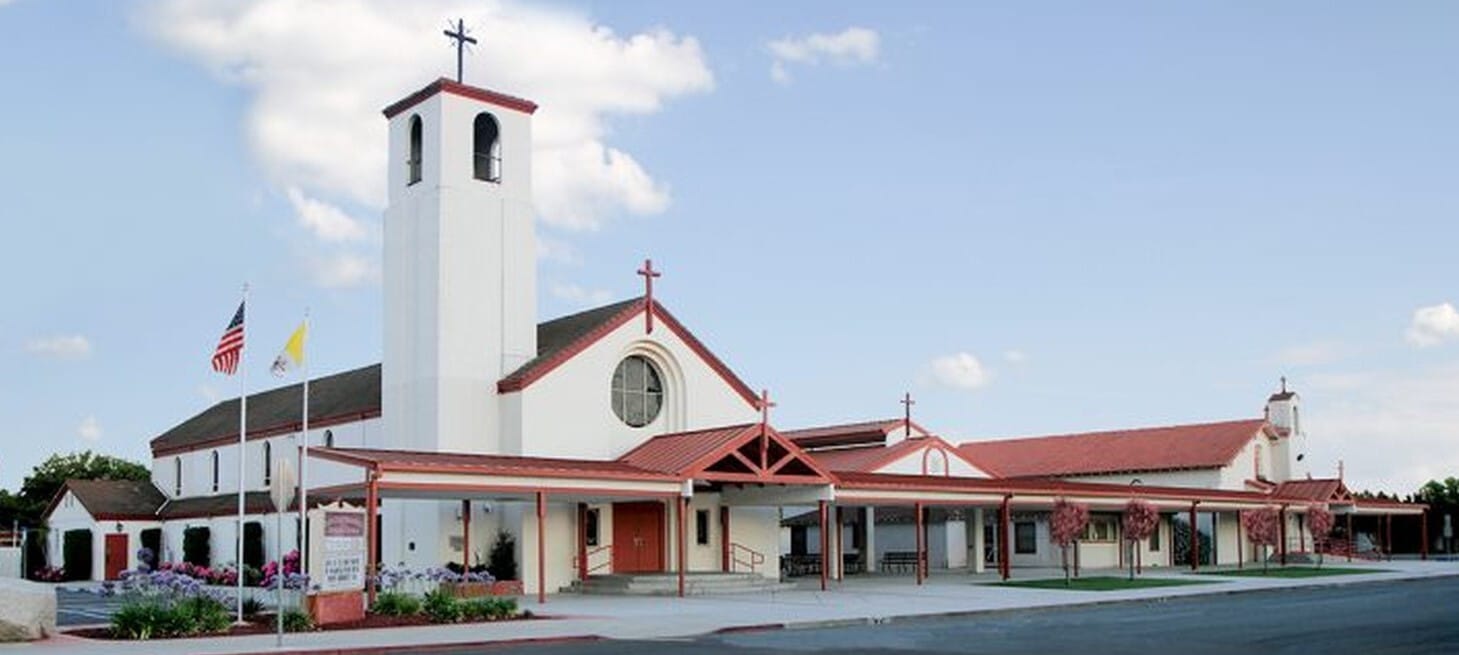
Monsignor Fonseca saved St. Jude’s Church in Livingston.
Livingston priest retired
Merced County Times. Livingston faithful bid farewell to Father Fonseca.
Synopsis: Monsignor Harvey Fonseca, a Dos Palos native, has retired after 30 years leading St. Jude Thaddeus Catholic Church in Livingston. He is credited with saving the poor parish from bankruptcy. He came to the priesthood after working as a surveyor and a high school teacher and even served as a Merced County supervisor before becoming a priest.
45,000 new houses in Fresno?
Fresnoland. Diverse coalition threatens ‘nuclear option’ to stop 45,000-home Fresno development.
Synopsis: A “diverse coalition” spearheaded by the Central Valley Partnership and Assemblymember Joaquin Arambula delivered an “ultimatum” to Mayor Jerry Dyer: Kill the Southeast Development Area or face a referendum in November. Among those joining the anti-SEDA coalition are former mayor Ashley Swearengin and the Central Labor Council. A referendum would strip the mayor and city council of their power to approve fringe development. The coalition says the project will cost $4.3 billion in infrastructure, but fees will cover only $1.3 billion. City officials pushed the planning commission to approve the plan even before its environmental documents were complete. The labor council’s Dillon Savory said, “urban sprawl is a Ponzi scheme.” Said Rhonda Dueck, “I’m not sure our job is to make developers rich.”
And one home for $6 mil
Fresno Bee. ‘Every inch’ of $6 million Fresno estate ‘exudes luxury.’
Synopsis: An estate at 6060 N Van Ness is “designed for both grand entertaining and intimate living,” according to listing agent Realty Concepts. The mansion has 7 bedrooms (five with their own bathrooms) and each with a private balcony. There’s a chef’s kitchen and all the electronics – lights, security, temp -- are controlled through 12 integrated iPads. Naturally, there’s a pool, home theater, wine cellar and game room. Oh, and a bar. The spa seats 15, the garage parks 4 cars. The house sits on 1 acre.

Would you pay $6 million for this house?