- Adam Gray Valley Solutions
- Posts
- Valley Solutions

Valley Solutions offers a daily look at the top headlines appearing on media websites affecting the San Joaquin Valley. It is compiled by Mike Dunbar, who worked in Stockton, Modesto, Merced and Los Banos media for 40 years and later served as Adam Gray’s press secretary when he was in the Assembly. Valley Solutions is brought to readers by Rep. Adam Gray.
Reach Mike Dunbar at [email protected].

Glyphosate is applied to a field in California.
Concern over glyphosate use
Mother Jones. We’ve identified CA’s top 100 Roundup users; some may surprise you.
Synopsis: Mother Jones is sending up flares over the use of glyphosate, the active ingredient in Roundup. The reporter searched state’s databases to track use of the herbicide and found that the Wonderful Co. used 328,000 pounds in 2023, more than any other entity. MJ provides a list, including Sierra Pacific (195K), Eynon Management (158K), Boswell Farms (153K) and Caltrans (153K). Among those who insist it makes people sick are RFK Jr. and his MAHA adherents but not Donald Trump, who shielded manufacturer Bayer from lawsuits this year. The story concentrates on the public perception of the chemical (two-thirds of those polled want it banned) and quotes an attorney about its toxicity. It also points to a survey by state inspectors who found glyphosate in every waterway tested in the Central Valley this year. The story offers one counterview – from Brad Hanson at UC Davis, who says it’s “more likely that my cheeseburger and IPA habit is a bigger problem.”
MAD Take: The findings of this story are meant to be alarming, as was Mother Jones’ contention a decade ago that every almond requires a gallon of water to grow. Still, there are three problems with this story: 1) The biggest users of this chemical are also the biggest landowners, so context was missing. Stewart Resnick’s Wonderful Co. farms 185,000 acres in the Valley, so it stands to reason it uses a lot of chemicals. Boswell farms 206,000 acres. Caltrans is required to keep weeds out of 350,000 acres of road right-of-way to mitigate fire danger and reduce visual impediments. Do the math. Even Wonderful used less than 2 pounds per acre in 2023, and Boswell less than a pound. Caltrans used 7 ounces per acre. 2) California has the most stringent herbicide/pesticide regulations and the most robust enforcement of any governmental entity on Earth – paid for (begrudgingly) by farmers. This results in the lowest pesticide- and herbicide-residue levels on food harvested anywhere in the world. Said another way, CA farmers produce the safest food in the world. 3) Finally, Roundup is expensive even before farmers pay to spread it around. No one uses more than necessary.

Data centers get more attention
Modesto Bee. San Joaquin County might pause data center: ‘We need to put our residents first.’
Synopsis: The San Joaquin Board of Supervisors joined the list of entities with serious concerns about the power and water consumption associated with data centers. The board directed its Community Development Dept to research a moratorium for consideration within 45 days. Data centers are necessary for artificial intelligence, which is being adopted by browsers and businesses across the country. Patterson has banned new data centers through July 2027, and Riverbank is discussing a ban.
Union Democrat. Tuolumne County supervisors reject data center pause, pursue new rules.
Synopsis: Tuolumne supervisors refused to enact an outright ban on data centers but did agree to develop regulations around their development. Supervisors want to limit the use of water, electricity and any “other local resource.” Calaveras County and Angels Camp have already enacted 45-day bans.

Wonder where they’ll be looking for more water?
A map to more Valley water
Maven’s Notebook. Congressionally authorized report provides roadmap for water investment.
Synopsis: The “Unified Water Plan” -- a congressionally authorized report for decision makers in eight counties in the San Joaquin watershed – has been released by the Water Blueprint for the San Joaquin Valley and the CA Water Institute at Fresno State. The plan covers Fresno, Kern, Kings, Madera, Merced, Stanislaus, San Joaquin and Tulare counties. It says the supply-demand gap will hit 2.5 million acre feet by 2040, which would require fallowing nearly 1 million acres. That would cost the region $7.2 billion in lost farm revenues and 85,000 jobs along with taxes from those paychecks. The plan offers three “nested investment scenarios” ranging from $18 billion to $33 billion. All hinge on restoring capacity to the Central Valley and State Water projects. The report closes by asking residents to “stay tuned for opportunities to participate.”
Bakersfield.com. Fong, Valadao throw cold water on state plan to rework flows from Delta.
Synopsis: The State Water Board’s plan on river flows, released Aug. 19, has been criticized (nearly a month later) by Reps. Vince Fong and David Valadao. The plan revises a 2006 order that attempts to balance fish flows with demands from communities and farms. The board encouraged agencies to develop “voluntary agreements” through the Healthy Rivers and Landscapes program. For those who don’t, such as the Kern County Water Agency, they could see “downward supply adjustments” except in wettest conditions. “An unelected board in Sacramento is once again telling farmers, workers and businesses that their water needs come last,” said the press release. “Higher costs and more regulation are not the answer.”

If it ever gets built, this is what Sites Reservoir will look like.
Changes in setting up Sites
SF Chronicle. CA’s biggest reservoir in decades is facing a crucial moment; will there be enough water?
Synopsis: Sites Reservoir northwest of Sacramento is facing a “pivotal” moment says the State Water Board, which released a draft water-rights decision to “balance supply benefits with protection of senior right holders, water quality and flows for fisheries.” It changes when water can be moved off the Sacramento River into the new storage facility but does not change the maximum amount that can be stored. Some groups were pleased with the announcement, others were frustrated. SF Baykeeper said it is “very concerned” with the changes. Sites is the largest reservoir built in CA since New Melones in 1978. The off-stream project will hold 1.5 million acre feet – enough to supply 3 million households (8.7 million people) for a year, though most of the water will be used to maintain Delta flows. Gov. Newsom calls it a “bipartisan, multi-benefit project that is essential for the future of California.” But strident environmental groups such as Baykeeper, the Sierra Club, NRDC and Restore the Delta are adamantly opposed. The board is accepting comment until Sept. 19.

Most of these cars add to the problem of pollution.
Drive-throughs pollute Valley air
Merced Focus. Valley has 1,300-plus fast-food drive-throughs; how does that affect air quality?
Synopsis: The air quality of the San Joaquin Valley has been out of compliance with national standards for more than a generation. Meanwhile, vehicles sitting in drive-through lines pump “a lush combination of hydrocarbons, oxides of nitrogen and other emissions, including carbon monoxide and carbon dioxide – stuff that contributes to ‘smog’” into the air. Just sitting in those lines exposes drivers to some of the highest levels of toxins anywhere. Yet, “the extent to which (drive-throughs) contribute to the degradation of the region’s air quality is a mystery that appears to have so far gone unstudied by regional and state air quality regulators.” UC Davis is changing that. It charted the time spent in each eatery’s line. Chick-fil-A is the worst at 7 minutes, 6 seconds followed by Popeye’s (6:50), Raisin Canes (6:23) and Dutch Bros (6:22). Taco Bell (4:16) and KFC (4:21) are the shortest. Fresno County has 324 drive-throughs, San Joaquin 197, Stanislaus 188, Merced 89 and Madera 41. The story concludes that 73,386 tons of CO2 get released into the air each year at fast-food drive-throughs along with 12 tons of NOx.
MAD Take: Years ago, an editorial writer for the Modesto Bee suggested drive-through lanes for restaurants, banks, cleaners, pharmacies, etc. should be eliminated. An air board rep called to say that the suggestion was wrongheaded, because turning off then re-starting an engine for those going inside produced more pollutants than idling. Maybe that was true in 2003 … maybe not.
60 Days: We’re further apart
PPIC. CA’s political geography2026.
Synopsis: The chasm between conservatives and liberals is getting deeper in California, according to a poll across 46 areas. More people view both politics and the news through a partisan lens textured by where they live – coast vs. inland. Far-northern CA is deep red, except in pockets like Eureka and Arcata. SF, LA and San Diego are deep blue, with pockets of suburban red.
Audit: StanCOG was a mess
Modesto Bee. Stanislaus Council of Governments audit finds accounting mess, lack of controls.
Synopsis: An audit conducted in 2024-25 when Rosa De Leon Park ran the Stanislaus Council of Governments found the agency’s financial records “were a shambles.” Much of this came out when the Stanislaus Civil Grand Jury found “lavish spending on rental cars, travel expenses, lodging and other purchase” by de Leon Park. She was fired in August 2025. Noncompliance with state regulations “created opportunities for fraud and abuse,” said the audit. Current director Amber Collins did not respond to The Bee, but her instructions upon being hired was to restore order to the agency.

The Mayor of Hughson on the left.
Hughson mayor in trouble … again
Modesto Focus. Kissing, touch and lewd joke accusations land Hughson mayor in hot water – once again.
Synopsis: George Carr is back in the news, accused of telling off-color jokes and unwanted kissing and touching of employees during StanRTA meetings in 2024. It’s the second time in two years the mayor has been accused of such behavior. The first was when Hughson councilmember Susana Vasquez said he made unwanted physical contact. An independent investigation sustained her version and he was censured. The latest accusation includes his actions during a conference in Anaheim. Confirmation of the activity was obtained through a public-records request submitted by the Stanislaus Taxpayers Association.
Trucker busted; part of meth ring?
Fresno Bee. FBI charges Indian national in wholesale drugs distribution in Fresno.
Synopsis: US Attorney Eric Grant said Kawal Preet Singh has been charged with intent to sell meth, possession of a firearm and being in the US illegally. He faces 10 years in prison and a fine of $10 million. He pleaded not guilty Thursday and will return to court on Nov. 4. Known as Camy, Singh has been working as a long-haul trucker and is said to be part of a network of Sikh drivers transporting narcotics.

This autonomous tractor saves on labor costs.
John Deere plows $ into Reservoir
Ag Net West. John Deere makes $10 million investment in CA ag tech.
Synopsis: Reservoir CEO Danny Bernstein announced that John Deere has signed a $10 million, multi-year partnership with Reservoir Farms to develop farming technology. Such labor-saving technology is necessary, said Bernstein, nothing that only 182 of some 415,000 advertised ag jobs got any domestic applicants in 2025; many went unfilled. There is need to automate many more tasks. “We actually have to deliver technology that works,” he said.
Tragedy on the highways
Merced Golden Wire (Facebook). Father, son among four killed in Madera County crash.
Synopsis: The Madera County Sheriff’s Office has identified Pedro Chavez Garcia and his 13-year-old son, also Pedro, as two of those killed in a tragic crash at Avenue 21 and Road 9. Young Pedro was a student at Weaver Middle School. Police say a GMC Sierra ran a stop sign and crashed into the Garcia’s Honda CR-V. All four of those killed were from Merced County.
Ceres Courier. Man shot on freeway, CHP investigates.
Synopsis: The Highway Patrol is investigating a shooting on Tuesday night as a teen motorist suffered a non-life threatening wound to his leg as he was driving north on Hwy 99 through Keyes. The shooting occurred around 10 p.m. with the shot coming from a passing car. The 19-year-old drove his car off the highway into Ceres where he was picked up by an ambulance. No information was released about the other car.
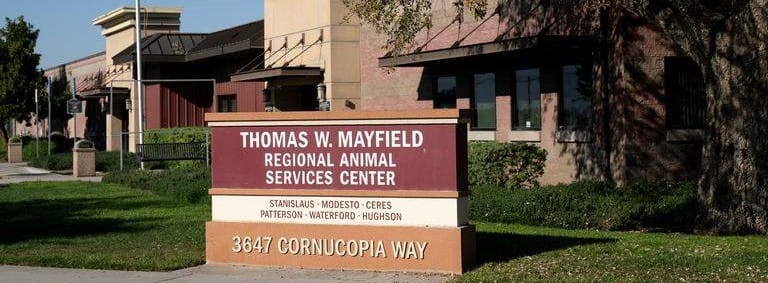
The animal shelter in Stanislaus County.
Shelter will keep dogs longer
Modesto Bee. Changes under way at Stanislaus Animal Services as interim director steps in.
Synopsis: Craig Gundlach has announced significant changes at the county animal shelter as he assumes leadership for a second time. The former police officer shared plans to extend the length of time dogs can remain in the shelter before being put on the euthanasia list. “That ball was already rolling when I got here,” said Gundlach. “It’s the leadership team here.” He has also reduced the number of “open kennels” at the shelter.
