- Adam Gray Valley Solutions
- Posts
- Valley Solutions

Valley Solutions offers a daily look at the top headlines appearing on media websites affecting the San Joaquin Valley. It is compiled by Mike Dunbar, who worked in Stockton, Modesto, Merced and Los Banos media for 40 years. Valley Solutions is brought to readers by Adam Gray.
Reach Mike Dunbar at [email protected].

Speed and unsafe driving make CA roads dangerous.
CA’s roads are death traps
Cal Matters. 40,000 people died on CA roads; state leads looked away.
Synopsis: Cal Matters reporters Robert Lewis and Lauren Helper continue their excellent exposé on California’s most dangerous real estate – our roads. Previously they reported on the state’s lax attitude toward drunk drivers as repeat offenders run rampant, pampered by the nation’s most lax DUI penalties. In this story they broaden their scope, deepening the outrage. Prior to 2010, traffic fatalities had been falling every year for decades. Since 2010, death numbers have been rising; in both 2023 and 2024 there were 20,000 fatalities on CA’s roads – the highest numbers ever. Solutions enacted by other states are said to be “too complicated” to use here. Top government officials refuse to even answer their phones. “The silence, in the face of a threat that endangers nearly every Californian, is damning,” write the reporters. Among those standing in the way of common-sense legislation is the ACLU, which worries impoverished drunks won’t be able to afford the equipment that would get them back on the road. “California couldn’t do something that nearly three dozen other states could.” Even if it had passed, CA judges would likely ignore it – just as they have so many other laws taking bad drivers off the roads.

To have enough water we must find a way to store more.
A plan for more water
Maven’s Notebook. Will advocates for more water-supply projects find unity?
Synopsis: Columnist Edward Ring offers a profound point of departure: “There’s only one way to restore reliable water allocations to farmers, avoid turning our cities into rationed xeriscaped heat islands and cope with whatever the climate ultimately delivers. That’s to build more infrastructure to safely and sustainably produce millions of acre feet of new fresh water every year.” Ring looks at the latest efforts by the Great Valley Farm Water Partnership, spearheaded by Randy Fiorini, which offers seven priorities: 1) Dredging the South Delta’s sediments; 2) predation suppression; 3) killing invasive aquatic weeds; 4) installing permanent flow-gates in the South Delta; 5) Rebuilding the levees; 6) Improving export during floods; 7) Building more storage south of the Delta. The problem is that all such common-sense solutions will take large and well-funded coalitions to achieve.
The real cost of water
Cal Matters. CA cities pay a lot for water; some ag districts get it for free.
Synopsis: An investigation by the UCLA Institute of the Environment and the Natural Resources Defense Council have come to the not-so-startling conclusion that cities pay more for water than water districts that supply farms. The authors of this so-called study told the reporter: “One of the West’s most valuable resources has no consistent valuation – and sometimes costs nothing at all.” The reporter talked to one of the state’s leading water experts, the PPIC’s Jeffrey Mount, who cautioned against reading too much into it. “We’ve got to be careful about pointing our fingers and saying farmers are getting a free ride.”
MAD Take: Not mentioned in the story were some basic facts. First, one of the two organizations doing the study – the NRDC – has consistently been at the forefront of trying to redirect the state’s water away from the Valley and toward the NRDC’s preferred uses. NRDC lobbyists regularly vilify farmers in those efforts. Second, surface water in CA belongs to the people – all of us, not just farmers or environmentalists. Use of this shared resource is dictated by proximity, governed by 140 years of law and doctrine, administered by agencies and constantly overseen by regulators who require water be used to benefit the public. To earn the right to use the state’s water, the people of our region worked together to raise money and build the reservoirs that allowed them to store and share the water – all at little or no cost to the state. Irrigation districts like Modesto, Turlock and SSJID share that water with cities across their region and far beyond. Low-cost water not only arrives through urban taps but guarantees affordable food. But hey, let’s just pretend that none of that is true and that farmers are ripping off everyone else. If you believe that, you might be persuaded by the NRDC’s companion piece entitled “Rethinking the price of water in the West.” This is part of concerted efforts to create “water markets” under which our water would be sold to the highest bidders. Wonder what food will cost if that becomes a reality?

CA’s fairs can be exciting places … and tempting.
A corruption merry-go-round?
LA Times. Times investigation finds fraud, theft are rife at CA’s county fairs.
Synopsis: There are 77 “county” fairs in CA, and most are “cherished local” institutions featuring unhealthy foods, beautiful animals and blue ribbons. But people involved in several county fairs have been found to be involved in fraud and mismanagement. At Humboldt, the former bookkeeper has been charged with stealing $430,000. Employees at four different county fairs have been prosecuted for theft or embezzlement. Officials at “dozens of other fairs” have been accused of misspending millions. There was an inside-job heist in Ventura, kickbacks in Santa Clara, bid-rigging in San Diego. The Santa Barbara and Stanislaus fairs violated state policies on competitive bidding. The state auditor says state-appointed county fair board members have allowed “gross mismanagement to continue unchecked for years.” It’s not surprising, say some, because fairs represent big money in their communities. It’s important because fairgrounds provide vital services, from meeting places to entertainment venues to emergency staging areas.
LA Times. From San Diego to Del Norte, a tally of recent scandals plaguing local fairs.
Synopsis: Part 2 details scandals in 26 different counties – including Stanislaus, where officials improperly used state credit cards to pay for “lavish dinners.” In San Joaquin, they bought gas for private cars and “inappropriate food.” Merced’s fair did not collect thousands owed by the fair foundation or require competitive bidding for some purchases. Fresno demanded vendors make donations to specific charities.
Should farmers be punished?
Ag Daily. The cost of blaming farmers: Why the $12B ‘bailout’ isn’t the story people think it is.
Synopsis: A hay farmer who is ineligible for Trump’s bailout money (“Hay producers simply aren’t on the list”) vents his frustration with those saying farmers deserve economic hardship because they voted Trump into office. He notes that many farmers struggled over their choice for president, often choosing Trump though they knew a trade war could ensue. Their lives hadn’t gotten better under Biden, and they wanted change. That said, there are far too few farmers to sway any national election. The US has “only about 2 million farmers left, and they feed everyone else.” So before you hope they suffer, recognize that if you “destabilize a group that small, the consequences do not stop at the farm gate.” In other words, “You cannot punish farmers without punishing the people they feed.”

Food boxes from the region’s largest food bank.
Save Mart helps food banks
GV Wire. $100,000 Save Mart gift to Fresno food bank builds lasting impact.
Synopsis: Save Mart has promised $201,000 in donations to four food banks in the Central Valley, from Yuba to Fresno. The largest donation, $100,000, will go to Central CA Food Bank in Fresno, a gift that Romel Escarrega says will be felt “far into the future.” It was also noted that 200,000 tons of food from grocery stores was recovered by food banks statewide. Part of the donation to the Fresno food bank will be used for equipment to expedite transfer of food from stores to 37 local food banks across five counties.

A lot of voices were raised during Christmas at the Courthouse.
Inspiration, eggnog and ukeleles
Merced County Times. Hundreds gather for Christmas at Courthouse.
Synopsis: Around 800 people came to the recently renovated Merced County Courthouse Museum for its 41st Annual Open House. They were treated to music, singing, ukuleles, eggnog and inspiration.
New jobs in Gustine, Fresno
Westside Connect. Correa to become Gustine City Manager in January.
Synopsis: Interim City Manager Melanie Correa will lose the “interim” part of her title starting in January. She replaces Nirorn Than, who left Gustine to become city manager in Los Banos. Before stepping into the vacancy, Correa had been Gustine’s administrative services director and before that deputy city clerk.
GV Wire. Fresno County Rural Transit leader to helm Measure C oversight agency.
Synopsis: Moses Stites will lead the Fresno County Transportation Authority starting Jan. 1. His assistant for eight years, Janelle del Campo, will take over at Fresno County Rural Transit Agency. Supervisor Buddy Mendes applauded the move, saying Stites has the most important qualification for the job: “You speak Caltrans.”
Candidates lining up
GV Wire. Candidates line up for Fresno County supervisorial District 1 race.
Synopsis: Political reporter David Taub notes that Kerman Mayor Maria Pacheco, Fresno councilmember Mike Karbassi, Firebaugh councilmember Felipe Perez and West Hills Community College District trustee Omar Hernandez have all filed to run for District 1 seat on the Fresno County’s board of supervisors. Pacheco is also a field rep for Assemblymember Esmeralda Soria while Hernandez works for Rep. Adam Gray. The District 1 seat is being vacated by Brian Pacheco as he runs to replace Soria in the Assembly. Soria is running to replace termed-out Anna Caballero in the Senate.
KSEE / CBS47. Coalinga wants someone new for its empty council seat.
Synopsis: The four members of the Coalinga city council will fill the District 5 seat by appointment, adding they hope to see some fresh faces among those who apply. Applicants must attend the Jan. 8 special meeting to be interviewed by council members.
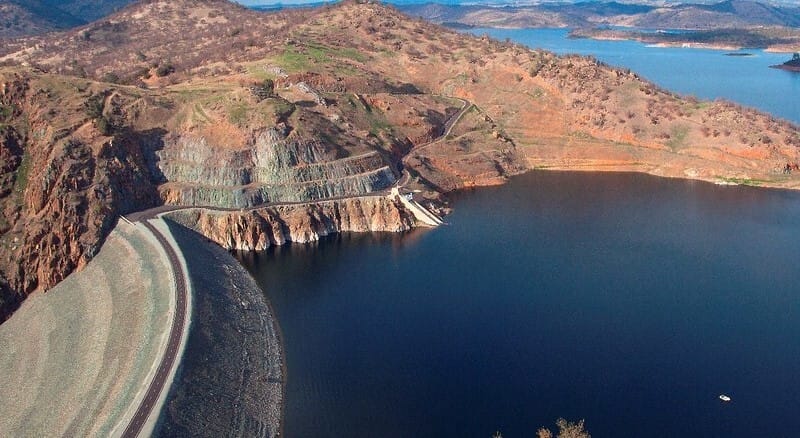
New Melones Reservoir holds back the Stanislaus River.
State’s plan for the Stanislaus
Escalon Times. Recharging seen as key for Stanislaus River watershed.
Synopsis: Columnist Dennis Wyatt writes about the new “control operations” recommended by the Dept of Water Resources for the Stanislaus River. As the climate warms and more water flows downstream earlier each year, flood risks can be mitigated while simultaneously storing up to 39,000-acre-feet of water during floods. Its procedures, says DWR, will increase aquifer recharge and blunt near-term climate impacts. If not followed, groundwater pumping will increase, over-drafting will rise and less water will be available for farming.

A Christmas wish list (No. 11)
Merced County Times. 11th Annual Christmas Wish List for Merced.
Synopsis: Author and retired teacher Marc Medefind appears in the County Times with his 11th annual Christmas Wish List. He’d like to see fewer pop-up vendors, more help for entrepreneurs and nicer alleys. Yes, nicer alleys.
Up on the roof … bad things
KSEE / CBS47. Roof of Fresno mosque set on fire, suspect wanted for questioning.
Synopsis: A man was seen on the roof of the My Deen mosque on East Bullard early Wednesday morning, just before a fire broke out. Crews responded quickly and the fire did little damage, except to some construction materials left up there. The suspect, who fled, is believed to be homeless.
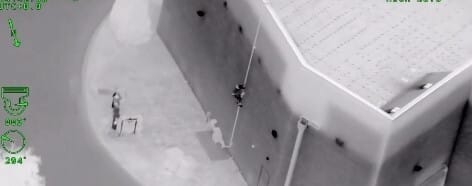
Fox26. Mission Impossible: Man scales down Best Buy in Modesto; arrested for attempted burglary.
Synopsis: Airborne Stanislaus deputies saw a man on the roof of the Best Buy in Modesto. When the helicopter approached, the man ran to the edge of the building then slid down what appears to be a pipe on the side of the building. He ran into a nearby neighborhood and tried to hide beneath some shrubs. But you can’t hide from infrared cameras. He was soon picked up and arrested for attempted burglary.